

[:it]Può un sistema di intelligenza artificiale essere designato come inventore in un brevetto? Il caso DABUS[:en]The DABUS case: can an artificial intelligence system be designated as the inventor in a patent?[:]
[:it]Un imprenditore americano, sostenuto da una squadra di legali, avvia una campagna internazionale di depositi di brevetto e ricorsi per sostenere la tesi che un sistema di intelligenza artificiale debba poter essere designato come inventore in una domanda di brevetto: successi limitati al Sudafrica e all’Australia, attesa per le decisioni sui ricorsi pendenti negli Stati Uniti e di fronte all’Ufficio Europeo dei Brevetti.
I brevetti per invenzioni nel campo dell’intelligenza artificiale (IA), o per invenzioni ottenute impiegando sistemi di IA, sono ormai numerosissimi e in crescita a livello mondiale.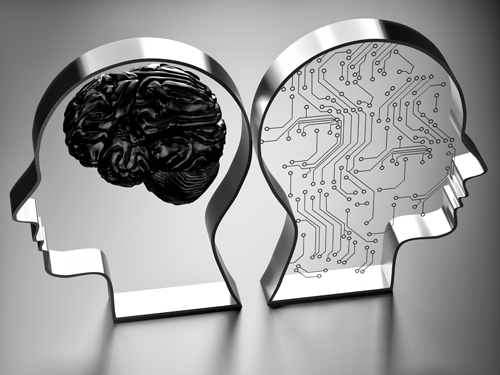
In questi giorni due notizie hanno acceso i riflettori su una domanda molto specifica che riguarda il futuro delle invenzioni sviluppate mediante un sistema di IA: può un tale sistema di IA essere designato come inventore in una domanda di brevetto?
Le notizie riguardano le domande di brevetto, depositate dall’amministratore della società statunitense Imagination Engines Inc. Steven Thaler, che designano quale inventore un sistema di IA denominato DABUS (Device for Autonomous Bootstrapping of Unified Sentience).
Il sig. Thaler ha depositato domande di brevetto presso numerosi uffici brevetti in tutto il mondo, designando sempre come inventore il DABUS. Molti di questi uffici hanno rigettato la domanda, spesso con la motivazione che in base alla normativa vigente l’inventore designato nella domanda stessa deve essere una persona fisica.
I due casi in cui il sig. Thaler è riuscito ad avere successo hanno dunque ricevuto una certa attenzione mediatica anche fuori dall’ambito degli esperti in proprietà industriale.
Il brevetto sudafricano
La prima notizia è stata che l’ufficio brevetti sudafricano aveva rilasciato il primo brevetto al mondo nel quale un sistema di IA è designato come l’inventore, e il proprietario di tale sistema, ovvero il sig. Thaler, è designato come titolare del brevetto. Il brevetto è stato pubblicato il 28 luglio 2021. Nonostante il clamore suscitato dal rilascio del brevetto, l’ufficio non ha commentato l’evento in alcun modo; va aggiunto che l’ufficio brevetti sudafricano di prassi non esegue un esame sostanziale del brevetto. Alcuni hanno ipotizzato dunque che il rilascio sia avvenuto senza che la designazione del sistema di IA come inventore fosse rilevata dall’ufficio.
La sentenza australiana
L’ufficio brevetti australiano aveva rigettato la domanda del sig. Thaler osservando che nel caso in cui inventore e titolare del brevetto non coincidano, è necessario che il titolare della domanda di brevetto ottenga il trasferimento della proprietà dell’invenzione dall’inventore; ma una macchina non può detenere una proprietà, dunque non è in grado di trasferirla. In aggiunta, l’ufficio aveva evidenziato che la legge brevetti australiana prevede che l’inventore sia un essere umano.
Il sig. Thaler ha presentato ricorso contro la decisione dell’ufficio, come ha fatto anche in altri paesi in cui le sue domande sono state rigettate.
La seconda notizia riguarda la sentenza della corte australiana del 30 luglio 2021 che ha dato ragione al ricorrente, stabilendo che la legge brevetti australiana non impone che l’inventore detenga la proprietà dell’invenzione, né che la trasferisca al titolare della domanda, bensì richiede che il titolare della domanda abbia ottenuto la proprietà dell’invenzione in un modo riconosciuto dalla legge. La sentenza stabilisce che il sig. Thaler è proprietario dell’invenzione poiché possiede e controlla non solo il DABUS ma pure il codice che esso utilizza, dunque ne possiede anche i prodotti; e conclude che un sistema di IA può essere designato come inventore, sebbene non come titolare del brevetto.
Nella sentenza si sottolinea che tale interpretazione si fonda fra l’altro sulla ratio della legge brevetti australiana, che è di incentivare l’innovazione. La corte intende infatti evitare che, negando l’esistenza di un titolare dell’invenzione nel caso di invenzioni realizzate da un sistema di IA, ne risulti un vuoto normativo che causi l’esclusione di tali invenzioni dalla tutela brevettuale in Australia.
L’obiettivo dei brevetti DABUS: stimolare il dibattito su brevetti e intelligenza artificiale
Il sig. Thaler ha presentato ricorsi, al momento ancora pendenti, anche negli Stati Uniti, nel Regno Unito e presso l’Ufficio Europeo dei Brevetti (EPO). In tutte e tre queste giurisdizioni la domanda di brevetto del sig. Thaler è stata respinta perché le norme vigenti impongono, esplicitamente o implicitamente, che l’inventore sia un essere umano (l’ufficio britannico ha inoltre sollevato la stessa obiezione di quello australiano sull’impossibilità per una macchina di possedere un’invenzione e dunque trasferirla ad altri).
L’obiettivo dichiarato della campagna internazionale di depositi e successivi ricorsi condotta dal sig. Thaler, con l’assistenza di una squadra internazionale di mandatari e legali, è quello di dimostrare che le norme che definiscono l’inventore ai fini del rilascio di un brevetto non tengono conto, allo stato attuale, del ruolo sempre maggiore svolto dall’IA nel raggiungimento di soluzioni innovative.
Aggiornamento: il 2 settembre 2021 un tribunale federale (United States District Court for the Eastern District of Virginia, Alexandria Division) ha respinto il ricorso del sig. Thaler contro la decisione dell’ufficio brevetti statunitense di rigettare la domanda di brevetto; sembra che i legali del sig. Thaler siano comunque intenzionati a presentare un ulteriore ricorso.
Aggiornamento: il 21 settembre 2021 la corte di appello (Court of Appeal of England and Wales) britannica ha confermato la sentenza dell’alta corte (High Court) che sua volta aveva sostenuto la decisione dell’ufficio della proprietà intellettuale britannico di respingere la domanda di brevetto del sig. Thaler. Tuttavia è probabile che anche la corte suprema del Regno Unito sarà chiamata ad esprimersi sul caso (leggi notizia)
Aggiornamento: il 21 dicembre 2021 la Commissione giuridica di ricorso dell’Ufficio europeo dei brevetti ha annunciato la decisione di respingere il ricorso del sig. Thaler contro il rifiuto dell’ufficio di accettare due domande di brevetto in cui l’inventore designato era il sistema di intelligenza artificiale noto come DABUS (leggi notizia).
Va detto per completezza che nel mondo della proprietà intellettuale è già in corso da almeno un quinquennio un ampio dibattito sul futuro della tutela brevettuale alla luce dello sviluppo dell’IA: le discussioni stanno coinvolgendo un numero elevato di portatori di interesse, fra i quali gli utenti dei sistemi di protezione della proprietà industriale, le associazioni di mandatari, i legislatori e gli enti che gestiscono tali sistemi a livello nazionale, regionale e internazionale.
La posizione dell’Ufficio Europeo dei Brevetti sull’intelligenza artificiale come inventore
Per quanto riguarda l’Europa, l’EPO ha già tenuto due conferenze internazionali sul tema dei brevetti per l’IA a metà 2018 e a fine 2020, svolto consultazioni con gli stati membri della Convenzione sul Brevetto Europeo e commissionato diversi studi, fra i quali ne segnaliamo uno particolarmente rilevante nel caso in questione dal titolo Inventorship in inventions involving AI activity, datato 2019.
La risultante posizione ufficiale dell’EPO riguardo la possibilità che un sistema di IA possa essere considerato l’inventore ai fini di una domanda di brevetto è che allo stato attuale un sistema di IA non è in grado di produrre invenzioni senza l’intervento umano; l’inventore è dunque un essere umano, e la Convenzione sul Brevetto Europeo richiede che l’inventore designato in una domanda di brevetto europeo sia un essere umano.
Sarà interessante seguire gli ulteriori sviluppi nei ricorsi riguardanti i brevetti DABUS, che hanno comunque il merito di stimolare la discussione già in atto sul futuro della tutela brevettuale alla luce dell’impiego crescente dell’IA nello sviluppo di innovazione.[:en]An American entrepreneur, supported by an international team of attorneys, has filed a number of patent applications and appeals worldwide to support the idea that it should be possible to designate an artificial intelligence system as the inventor in a patent application: while success has been so far limited to South Africa and Australia, appeals are pending in the United States and before the European Patent Office.
Patents for inventions in the field of Artificial Intelligence (AI), or for inventions obtained by employing AI systems, exist worldwide in large, and growing, numbers.
Over the last few weeks two events have put into the spotlight a very specific question concerning the future of patenting inventions developed using an AI system: can such an AI system be designated as the inventor in a patent application?
Both events concern the patent applications filed by the US company Imagination Engines’ CEO Steven Thaler in which the designated inventor is an AI system named DABUS (Device for Autonomous Bootstrapping of Unified Sentience).
Mr. Thaler has filed the applications with many patent offices worldwide, always designating the DABUS as the inventor. Many of those offices have rejected the application, often on the ground that under applicable laws the inventor in a patent application must be a person. Thus the two cases in which Mr. Thaler has been successful have received much attention, also by the media.
The South African patent
The first event was the granting of the world’s first patent with an AI system as the inventor by the South African patent authority: the owner of the patent is indeed Mr. Thaler.
The patent was published on 28 July 2021. Notwithstanding the media publicity, the office released no comment. It should be noted that the South African patent authority does not perform a substantial examination of applications; doubts have been raised about whether the designation of an AI system as the inventor in the patent application was noted at all.
The Australian court ruling
The Australian intellectual property office had rejected Mr. Thaler’s application, pointing out that when the inventor and the owner of the application do not coincide, it is necessary for the owner to obtain the transfer of ownership of the invention from the inventor; however a machine cannot own property and can therefore not transfer it. In addition, the office pointed out that Australian patent law requires the inventor to be a human.
Mr. Thaler appealed the decision of the office, as he has done in other states in which his applications have been rejected.
On 30 July 2021 the Australian Federal Court ruled in favour of the appellant. The court found that Australian patent law does not require the inventor to be the owner of the invention or that ownership of the invention be transferred from the inventor to the owner of the patent application. However the owner of the patent application must have obtained ownership of the invention in a way that is recognised by the law.
According to the court Mr. Thaler is the owner of the invention because he owns and controls not only the DABUS but also the code employed by it; therefore Mr. Thaler also owns the output of the DABUS, including the invention for which patent protection is sought.
The court thus held that an AI system can be designated as the inventor, but not as the owner, in a patent application.
The decision points out that such an interpretation is based, inter alia, on the spirit of Australian patent law, which is to encourage innovation. The court wished to steer clear of causing a legislative void by denying the existence of an owner for inventions created by an AI system, because such a void would exclude those inventions from patentability in Australia.
The point of the DABUS patents: stimulating the discussion on patents and artificial intelligence
Mr. Thaler has filed appeals that are still pending also in the United States, in the United Kingdom and before the European Patent Office (EPO). In all three of these jurisdictions Mr. Thaler’s patent application was rejected because applicable laws require, either explicitly or implicitly, that the inventor be a human (the UKIPO also raised the same objection as the Australian office concerning the inability of a machine to own an invention and therefore to transfer its ownership).
The declared intent of the international campaign of patent applications and appeals, conducted by Mr. Thaler, with the assistance of an international team of attorneys, is to show that laws defining the inventor for the purpose of granting a patent do not, as things stand, take into account the increasingly important role played by AI in developing innovative solutions.
Update: on 2 September 2021 the United States District Court for the Eastern District of Virginia, Alexandria Division, struck down Mr. Thaler’s appeal against the decision of the United States Patent and Trademark Office to reject his patent applications; it appears that Mr. Thaler’s attorneys intend to appeal the court’s decision.
Update: on 21 September 2021 the Court of Appeal of England and Wales confirmed the earlier ruling of the High Court upholding the UKIPO’s decision to reject Mr. Thaler’s patent applications. It is likely, however, that the Supreme Court will be asked to rule on the case (more here).
Update: on 21 December 2021 the Legal Board of Appeal of the European Patent Office announced its decision to dismiss Mr. Thaler’s appeal against the office’s refusal of two patent applications in which the artificial intelligence system known as DABUS was designated as the inventor (more here).
It must be added that an international, wide-ranging debate on the future of patent protection in the light of the development of AI has been ongoing for the last five years at least. Discussions are engaging many stakeholders such as legislators, IP attorney associations, intellectual property protection systems users and the authorities managing such systems at a national, regional and international level.
The EPO’s position on artificial intelligence as an inventor
As far as Europe is concerned, the EPO held two international conferences on patents for AI in mid-2018 and at end 2020 respectively; it has also carried out consultations with the member states of the European Patent Convention and commissioned several studies, including the particularly relevant one in the case at issue titled AI inventorship in inventions involving AI activity, dated 2019.
The EPO’s resulting official position on the eligibility of an AI system to be designated as the inventor in a patent application is that, as things stand, an AI intelligence system is unable to create inventions without human intervention; the inventor is therefore a human, and the European Patent Convention requires that an inventor designated in a European patent application be a human.
It will be interesting to follow developments in the appeals concerning the DABUS patent applications, that certainly have the merit of stimulating the ongoing discussion on the future of patent protection in the light of the growing use of AI in the development of innovation.[:]