

[:it]NFT MetaBirkin, prima decisione di un tribunale USA[:en]First US court decision in MetaBirkin NFT case[:]
[:it]Gli NFT MetaBirkin sono opere d’arte, o sono stati creati al solo scopo di sfruttare illegittimamente la notorietà della iconica borsa Birkin? La prima decisione di un tribunale federale statunitense nella causa fra la maison di moda Hermès e l’artista Mason Rothschild non mette fine alla disputa, ma fornisce alcuni elementi utili alla tutela dei brand nelle nuove piattaforme virtuali del metaverso.
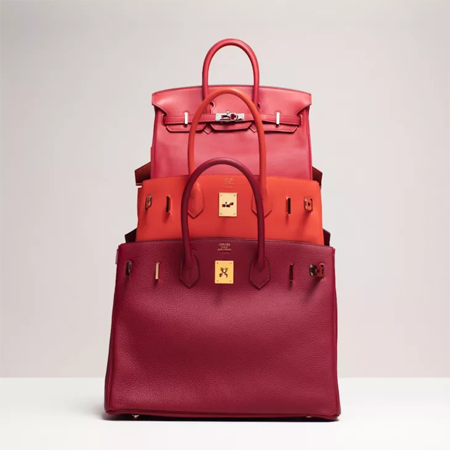
Borse Birkin – immagine tratta dal sito hermes.com
Il 18 maggio 2022 un tribunale federale degli Stati Uniti (United States District Court for the Southern District of New York, nel seguito il tribunale) si è pronunciato nella disputa fra la casa di moda francese Hermès International/Hermès of Paris Inc. (Hermès nel seguito) e Mason Rothschild, artista digitale statunitense.
Il caso è particolarmente degno di nota poiché coinvolge diversi temi di grande attualità: la produzione di NFT senza l’autorizzazione del titolare dei diritti di proprietà intellettuale, i limiti entro i quali l’uso di un marchio è consentito a fini artistici e la tutela dei brand della moda nel metaverso.
I fatti nel procedimento
La Hermès aveva avviato la causa in seguito alla produzione e alla vendita da parte di Mason Rothschild, senza il consenso di Hermès, di una serie di NFT connessi a immagini digitali riproducenti la borsa Birkin, modello iconico sul quale la maison francese detiene diritti di marchio.
Nelle immagini connesse agli NFT contestati, Mason Rothschild aveva rielaborato il modello della borsa sia nel materiale (pelliccia sintetica), che nel colore e nelle decorazioni, ma il modello Birkin rimaneva riconoscibile e gli NFT venivano commercializzati (vedi qui) con il nome “MetaBirkin” a prezzi non lontani da quello di una autentica borsa Birkin della Hermès.
Nel suo ricorso, la Hermès aveva lamentato la violazione dei propri diritti sul marchio Birkin, e documentato casi in cui sia i media che i consumatori avevano palesato la convinzione che le MetaBirkin fossero riconducibili alla Hermès stessa.
L’artista aveva chiesto al tribunale di dichiarare inammissibile il ricorso della Hermès, citando precedenti in cui la tutela della libertà di espressione sancita dal primo emendamento della Costituzione statunitense era stata estesa a opere d’arte “espressive” riproducenti, nel titolo o nel contenuto, marchi registrati di proprietà di terzi.
Il tribunale ha dovuto dunque stabilire essenzialmente se le immagini delle MetaBirkin debbano considerarsi prodotti commerciali privi di carattere espressivo, nel qual caso è sufficiente stabilire se sia ravvisabile la violazione dei marchi registrati, oppure opere d’arte dotate di carattere espressivo (di cui gli NFT avevano semplicemente certificato la proprietà), nel qual caso è necessario tenere in considerazione sia i diritti di marchio della Hermès che i diritti dell’artista a citare il marchio stesso.
La decisione del tribunale
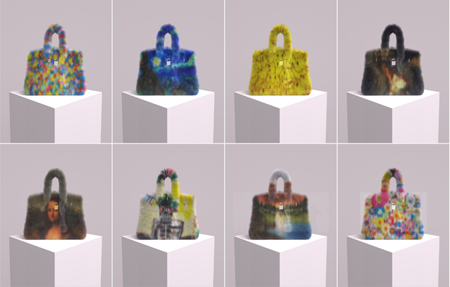
MetaBirkin create da Mason Rothschild – immagini tratte dal sito looksrare.org
Il tribunale ha stabilito, da un lato, che le MetaBirkin sono opere d’arte digitale dotate di carattere espressivo, alle quali sono applicabili sia la tutela del primo emendamento che la giurisprudenza invocata dall’artista.
Dall’altro lato, il tribunale ha respinto la richiesta di Mason Rothschild di dichiarare inammissibile il ricorso della Hermès in quanto quest’ultima aveva presentato prove sufficienti a dimostrare che l’uso del nome MetaBirkin non ha alcuna rilevanza artistica, e che anche se ne avesse è comunque ingannevole rispetto all’origine o al contenuto delle opere.
La decisione non pone dunque fine al contenzioso legale. Tuttavia sono da evidenziare due considerazioni interessanti su questa prima pronuncia.
1 – L’uso dell’NFT di per sé non priva l’opera del suo carattere artistico – Per il tribunale, l’NFT è semplicemente uno strumento atto a certificare l’autenticità dell’immagine e tracciarne i passaggi di proprietà; di per sé l’uso di NFT in connessione con le immagini digitali non dimostra che la natura di queste sia unicamente commerciale al punto di escludere la tutela riservata alle opere d’arte.
2- NFT indossabili – In una nota alla decisione, il tribunale ha osservato che la scelta di considerare le opere di Mason Rothschild meritevoli della tutela in quanto opere d’arte avrebbe potuto essere diversa nel caso in cui gli NFT fossero stati collegati all’immagine digitale di una borsetta Birkin virtualmente indossabile.
L’uso di NFT indossabili è già diffuso e in rapida espansione nei giochi online e nelle piattaforme virtuali in generale, dunque l’annotazione del tribunale tende a confermare l’opportunità di estendere la tutela di marchi e design per coprire l’uso per NFT e piattaforme virtuali.
Tale estensione appare dunque particolarmente urgente per i brand nel settore della moda e di altri prodotti indossabili o comunque utilizzabili in contesti di gioco e piattaforme virtuali (vedi il nostro recente articolo Il metaverso, i marchi e la proprietà intellettuale: opportunità e rischi).
Per informazioni
Hai necessità di tutelare i tuoi marchi e design dall’uso non autorizzato su internet e nelle piattaforme virtuali? Contattaci per informazioni.
Contenuti correlati
Flash news – NFT e proprietà intellettuale, come tutelarsi dall’uso non autorizzato di marchi e design
Flash news – Il metaverso, i marchi e la proprietà intellettuale: opportunità e rischi
[:en]Are the MetaBirkin NFTs works of art, or were they created for the sole purpose of illegally exploiting the renown of the iconic Birkin bag? The first decision of a US federal court in the case between fashion house Hermès and artist Mason Rothschild does not end the dispute, but provides some initial guidance for the protection of brands on virtual platforms.
On 18 May 2022 the United States District Court for the Southern District of New York (hereinafter the court) ruled in the dispute between the French fashion house Hermès International / Hermès of Paris Inc. (hereinafter Hermès) and Mason Rothschild, an American digital artist.
Birkin bags – image from the hermes.com website
The case is noteworthy as it involves several highly topical issues: the production of NFTs without the authorization of the owner of the intellectual property rights, the limits of unauthorised trademark use for artistic purposes and the protection of fashion brands in the metaverse.
Facts in the case
Hermès brought proceedings against Mason Rothschild after the artist created and sold, without Hermès’ consent, a number of NFTs of digital images reproducing the Birkin bag, an iconic model for which the French maison owns trademark and trade dress rights.
In the images connected to the disputed NFTs, Mason Rothschild had changed the material (synthetic fur), colours and decoration of the bags, but the Birkin model remained recognizable and the NFTs were marketed (see here) under the name “MetaBirkin ”at prices approaching those of authentic Hermès Birkin bags.
Hermès claimed infringement of its trademark rights, and documented cases in which both the media and consumers believed that the MetaBirkins were Hermès products.
The artist asked the court to declare Hermès’ appeal inadmissible, citing case law in which the protection of freedom of expression enshrined in the First amendment of the US Constitution had been extended to “expressive” works of art reproducing, in title or content, registered trademarks owned by third parties.
The court was essentially called to establish whether the MetaBirkin images should be considered commercial products without an expressive character, in which case it is sufficient to establish whether intellectual property rights have been infringed, or works of art with an expressive character (the NFTs merely a certification), in which case both Hermès’ intellectual property rights and the artist’s right to use the trademark must be taken into account.
The court’s decision
The court ruled, on the one hand, that the MetaBirkins are digital works of art possessing expressive character, therefore both First Amendment protection and the case law invoked by the artist apply.
On the other hand, the court rejected Mason Rothschild’s request to declare Hermès’ appeal inadmissible, on the ground that the appeal was based on enough evidence to show that use of the name MetaBirkin has no artistic relevance, and even if had any, it is misleading as to the origin or content of the works.
MetaBirkins created by Mason Rothschild – images from the looksrare.org web site
Although the decision does not put an end to the legal dispute, two points deserve attention.
1 – An NFT does not per se deprive the work of artistic character – For the court, an NFT is merely a tool certifying the authenticity of the image and tracing ownership transfer; in itself, use of NFTs in connection with digital images does not prove that the nature of the images is purely commercial to the point of excluding the protection provided for works of art.
2 – Wearable NFTs – In a footnote, the court suggested that the choice to consider Mason Rothschild’s works worthy of protection as works of art could have been different had the NFTs been linked to the digital image of a virtually wearable Birkin handbag.
The use of wearable NFTs is already widespread and rapidly expanding in online games and virtual platforms in general, so the court’s comment tends to confirm the need to extend trademark and design protection to cover use for NFTs and virtual platforms.
Extending protection appears most urgent for brands in the areas of fashion and other wearable products, as well as of any other products that can be used in gaming contexts and virtual platforms (see our recent article The metaverse, trademarks and intellectual property: opportunities and risks).
Related content
Flash news – NFTs and intellectual property, what you need to know to protect your trademarks and designs
Flash news – The metaverse, trademarks and intellectual property: opportunities and risks[:]