


[:it]La valutazione del carattere individuale di un design: sentenza del Tribunale UE nella causa H&M/YSL[:en]Informed user perception is central in assessing Community designs’ individual character: rulings in H&M v. YSL[:]
[:it]Una sentenza del Tribunale dell’Unione Europea in una disputa riguardante un design registrato di una borsa da donna ha confermato che la percezione del pubblico di riferimento è fondamentale nel giudizio sul carattere individuale di un design comunitario, mentre il grado di libertà dell’autore del design è semplicemente un elemento che può rafforzare o moderare tale giudizio.
La H&M aveva richiesto che un design comunitario registrato di proprietà della Yves Saint Laurent (nel seguito la YSL) fosse annullata con la motivazione che il design era privo di “carattere individuale ai sensi dell’articolo 6 del Regolamento sul design comunitario. La H&M aveva invocato un design registrato anteriormente per avvalorare la presunta mancanza di carattere individuale nel design della YSL (vedi figure)
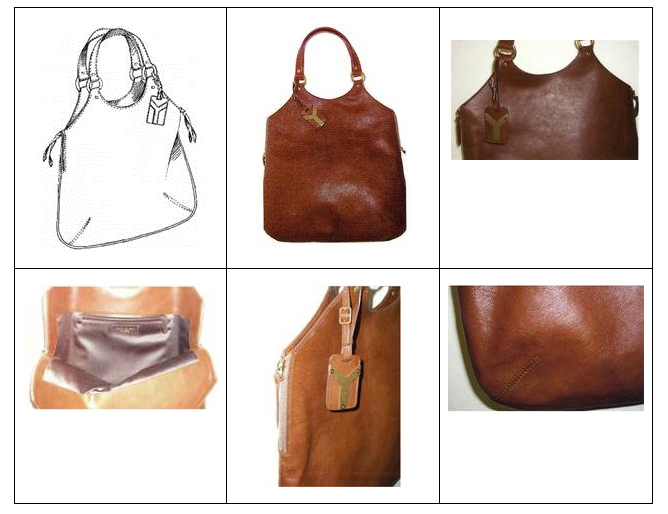 |
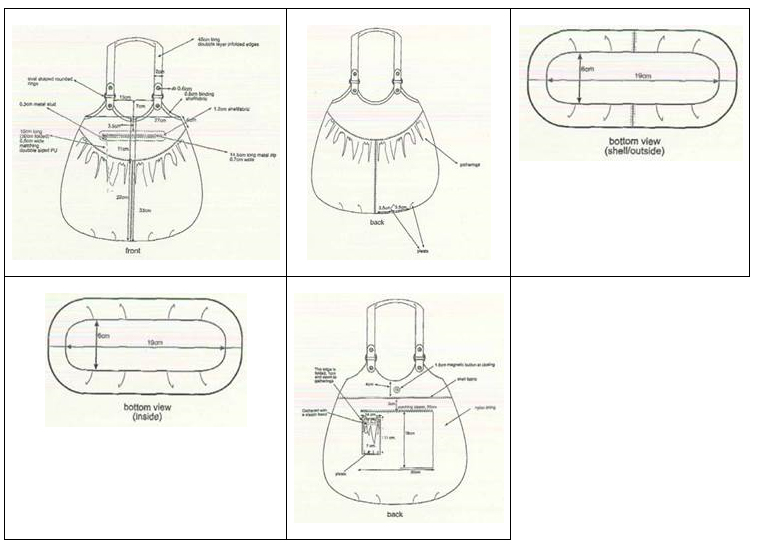 |
Il design registrato dalla YSL |
Il design precedente
|
La Divisione di Annullamento dell’Ufficio per l’Armonizzazione nel Mercato Interno (UAMI) aveva respinto le due richieste di dichiarazione di nullità presentate dalla H&M.
Contro tali decisioni la H&M aveva presentato ricorsi prima alla Commissione di Ricorso dell’UAMI, poi al Tribunale dell’Unione Europea (il tribunale). Il tribunale ha emesso due sentenze, T-525/13 e T-526/13 (in inglese), il 10 settembre 2015.
La Commissione di ricorso UAMI aveva stabilito essenzialmente che:
- l’utilizzatore del design era da identificarsi in una donna informata, interessata alle borse quale utente;
- i due design avevano caratteristiche in comune quali il contorno superiore e la presenza di un manico a forma di cinghia(e) attaccata(e) al corpo tramite un sistema di anelli rinforzato da rivetti, ma anche differenze differenze significative di forma, struttura e finitura superficiale che assumevano un ruolo decisivo nell’impressione complessiva prodotta dalle due borse;
- gli autori dei modelli delle due borse avevano beneficiato di un ampio margine di libertà – nel senso che non vi erano limiti particolari alla gamma di modelli disponibili dovuti alla funzione tecnica del prodotto requisiti di legge, ecc.
- tale margine di libertà non cancellava, dal punto di vista dell’utilizzatore informato, le significative differenze di forma, struttura e finitura superficiale che differenziavano le due borse.
La H&M aveva motivato i sui ricorsi al tribunale sostenendo che la Commissione di ricorso avesse errato nel concludere che:
1. le differenze fra i due design in questione fossero sufficienti a creare un’impressione complessiva diversa nell’utilizzatore informato;
2. l’ampio margine di libertà dell’autore del design non avesse alcun impatto su tale conclusione.
Le sentenze del tribunale
Il tribunale ha negato la fondatezza di entrambi gli argomenti e respinto i ricorsi. Le sentenze sottolineano che ai sensi del regolamento sul design comunitario, la valutazione del carattere individuale nel raffronto fra due design è sostanzialmente un esame articolato in quattro fasi, ovvero la determinazione di 1) il settore di prodotti al quale il design appartiene, 2) l’utilizzatore informato e il suo livello di attenzione, 3) il margine di libertà dell’autore nell’elaborare il design e 4) il risultato del confronto dei disegni o modelli di cui trattasi.
Ciò detto, il punto di partenza per la valutazione del carattere individuale, secondo il tribunale, deve essere sempre la percezione dell’utilizzatore informato. Il margine di libertà non può di per sé produrre risultati riguardo alla valutazione del carattere individuale: è unicamente uno degli aspetti da prendere in considerazione, che può rinforzare o attenuare il giudizio formato in base alla percezione dell’utilizzatore informato.
Conseguenze pratiche
Le due sentenze confermano che la forza di una registrazione comunitaria di design risiede principalmente nel suo carattere individuale, e che tale caratteristica dipende in parte preponderante dalla percezione del consumatore di riferimento.
Queste due sentenze sottolineano quando sia importante la scelta delle immagini da includere in una richiesta di registrazione comunitaria per un design: se le foto comprese nella domanda di registrazione della YSL fossero state meno dettagliato, la Commissione di ricorso dell’UAMI e lo stesso tribunale avrebbero avuto maggiori difficoltà nell’apprezzare i dettagli (quali la finitura di superficie e le cuciture) che sono stati ritenuti differenziare i due modelli agli occhi dall’utilizzatore informato.
29 ottobre 2015[:en]In its decision on a dispute concerning a design registration for a handbag, the General Court of the European Union confirms that the perception of the informed user is key in judging a Community design’s individual character, while the degree of freedom of the designer is merely an element which can reinforce or moderate that judgement.
H&M sought to have a Community design registration owned by Yves Saint Laurent (YSL) declared invalid on the grounds that the design had no “individual character” within the meaning of Article 6 of the Community Design Regulation. H&M invoked an earlier design registration to substantiate the alleged lack of individual character of YSL’s design (see pictures).
|
|
YSL’s contested Community
|
The earlier design |
The Cancellation Division of the Office for Harmonization in the Internal Market (OHIM) rejected H&M’s two separate requests for a declaration of invalidity. H&M appealed first to OHIM’s Board of Appeal, that confirmed both the Cancellation Division’s decisions, and then to the General Court of the European Union (GCEU), that issued its judgements in cases T-525/13 and T-526/13 on 10 September 2015.
The OHIM’s Board of Appeal had essentially found the following:
- the user of the design was an informed woman interested in handbags as a possible user;
- the two designs had features in common such as the two bags’ upper contours and handles attached to the bags by rings reinforced by rivets, but also differences in shape, structure, seams and surface finish that played a decisive role in the overall impression produced by the two bags;
- the designers of the two bags had enjoyed a high “degree of freedom” – meaning that there were no particular limits to the range of designs available, determined by the technical function of the product, by applicable statutory requirements etc.
- that degree of freedom did not, from the point of view of the informed user, cancel the significant differences in shape, structure and finish which made the two bags different.
H&M grounded its appeals to the GCEU on the claim that the BoA had erred in finding that:
1. the differences between the designs at issue were significant enough to create a different overall impression on the informed user;
2. the designers’ high degree of freedom had no impact on that finding.
The rulings of the General Court
The GCEU rejected both arguments and dismissed the appeals. The decisions point out that according to the Community Design regulation, the criteria to be followed in the assessment of individual character in the comparison two designs is an essentially four-stage examination, based on 1) the sector to which the designs belongs, 2) the informed users and their level of attention, 3) the designer’s degree of freedom and 4) the outcome of the comparison of the designs.
That said, the starting point in assessment of individual character, according to the GCEU, must always be the perception of the informed user. The degree of freedom cannot on its own give rise to an outcome in the assessment of individual character of the design: it is merely one of the aspects to be taken into consideration, which can serve to reinforce or moderate the judgement formed on the basis of the perception of the informed user.
Practical consequences
The two decisions confirm that the strength of a Community design right lies mostly in its individual character, and that this feature depends mostly on the perception of the relevant consumer.
When filing for Community registration of a design, it is also important to bear in mind this decision when choosing the images to be included in the application: had the photographs in the YSL application been less detailed, it might have been harder for the OHIM’s BoA and for the General Court to appreciate the details (such as surface finish and seams) that were recognised as making the difference between the two designs in the eyes of the informed user.
29 October 2015[:]