


[:it]Diritto d’autore, design e marchio tridimensionale: il caso Ty Nant – Bormioli Rocco[:en]Copyrights and trademark rights in Ty Nant bottle design infringed by lookalike glass: Italian court ruling[:]
[:it]MARCHI E DESIGN – GIURISPRUDENZA
Secondo il Tribunale di Milano, il bicchiere Sorgente imita la bottiglia Ty Nant a tal punto da indurre il pubblico a credere che i due prodotti provengano dalla stessa impresa: la sentenza ha riconosciuto al design Ty Nant la tutela del diritto d’autore e quella derivante dalla registrazione come marchio tridimensionale.
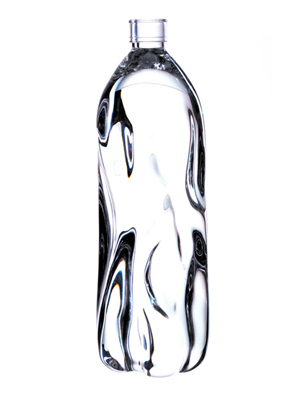
La bottiglia Ty Nant (design di Ross Lovegrove)
Il noto designer gallese Ross Lovegrove è autore del design della bottiglia in PET chiamata “Ty Nant” (“casa vicino al ruscello” in lingua gallese), creato nel 2002 e utilizzato dalla Ty Nant Spring Water Ltd. Per imbottigliare l’acqua dell’omonima fonte gallese.
Lovegrove, la società Ty Nant Spring Water Ltd. e il titolare (italiano) della società avevano iniziato un procedimento dinanzi al Tribunale di Milano contro la Bormioli Rocco S.p.A., fabbricante di prodotti in vetro per la casa , lamentando che la serie di bicchieri in vetro denominati “Sorgente” prodotti e venduti in Italia dalla Bormioli Rocco violavano i diritti d’autore sulla bottiglia Ty Nant oltre ai diritti derivanti dalla registrazione della bottiglia come marchio comunitario tridimensionale per i seguenti prodotti in Classe 32: acqua in bottiglia; acqua minerale in bottiglia; acqua di sorgente e acque gassate.
Il tribunale aveva ritenuto che la bottiglia TY Nant possedesse i requisiti di novità, carattere creativo e valore artistico necessari per godere della protezione prevista dall’Articolo 2, comma 10 della legge sul diritto d’autore. Le linee, rientranze e curve utilizzate nella bottiglia in PET per rappresentare ed evocare l’idea del fluire dell’acqua erano state identificate dal tribunale quale concetto innovativo del design.
La valutazione del carattere artistico del modello si fondava anche sull’apprezzamento nel tempo della bottiglia come opera d’arte, dimostrato dalla sua inclusione nelle collezioni e mostre di primari musei d’arte, dalla candidature a premi di design e dalla pubblicazione in prestigiose riviste di design, architettura e moda.
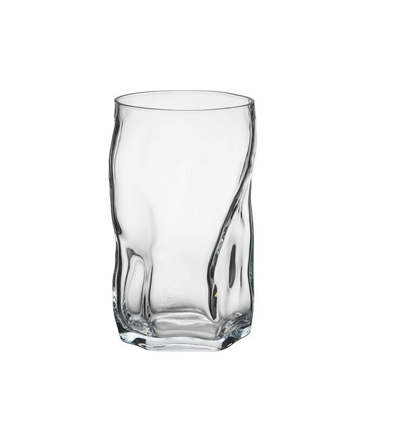
Il bicchiere Sorgente della Bormioli Rocco
Per quanto riguarda i bicchieri Sorgente, il tribunale ha stabilito che erano fabbricati con vetro lavorato per imitare l’effetto della fluidità dell’acqua imitando pedissequamente le linee, curve e rientranze del modello Ty Nant, e che visionando i bicchieri accanto alla bottiglia Ty Nant era percepibile un continuum fra i due oggetti.
Secondo il tribunale, dal momento che bottiglia e bicchiere soddisfano il medesimo bisogno primario di bere e i due oggetti sono normalmente utilizzati insieme, i consumatori potevano facilmente concludere che i due prodotti provenissero dalla medesima impresa. Dunque il tribunale ha ritenuto che sebbene il marchio Ty Nant non coprisse i bicchieri, esisteva un rischio di confusione a causa della somiglianza fra il marchio tridimensionale Ty Nant e i bicchieri Sorgente.
Con sentenza n. 11700 del 1 dicembre 2015, il Tribunale di Milano ha pertanto ritenuto che i bicchieri Sorgente violassero sia i diritti d’autore che i diritti di marchio sul design della bottiglia Ty Nant, e ha inibito alla Bormioli Rocco di produrre e vendere i bicchieri, fissando una penale per ciascun articolo venduto in violazione dell’inibitoria.
In merito alla richiesta di risarcimento, il tribunale ha ritenuto necessaria ulteriore attività istruttoria – in particolare l’esame delle scritture contabili della Bormioli Rocco – e ha dunque proceduto con ordinanza separata alla remissione della causa sul ruolo ed all’ammissione dei relativi mezzi istruttori.
21 dicembre 2015[:en]COPYRIGHTS AND DESIGN – CASE LAW
According to the Milan Court, the Sorgente glass imitates the Ty Nant bottle to such a degree that the public may consider the two items as coming from the same enterprise: the decision holds that the glass infringes both copyrights and 3D trademark rights in the bottle.
The Ty Nant bottle, designed by Ross Lovegrove.
Renowned Welsh designer Ross Lovegrove is the author of a plastic bottle design named “Ty Nant” (Welsh for “house by the stream”) created in 2002 and used by Ty Nant Spring Water Ltd. to bottle the water from the Welsh spring of the same name.
Mr Lovegrove, Ty Nant Spring Water Ltd. and the company’s (Italian) owner brought proceedings before the District Court of Milan (the court) against Bormioli Rocco S. p. A., an Italian glass and tableware manufacturer, claiming that the series of glasses named “Sorgente” manufactured and sold in Italy by Bormioli Rocco infringed copyrights in the Ty Nant bottle as well as trademark rights arising from a Community 3D trademark registration of the bottle’s shape, covering bottled water, bottled mineral water, spring water and aerated water in Class 32.
The court found that the Ty Nant bottle design possessed sufficient novelty, creative character and artistic value to be eligible for copyright protection under Article 2 (10) of Italian copyright law. The Court identified the designer’s use of lines, folds and curves in the plastic bottle to represent and evoke the idea of running water as the innovative concept of the design.
The court based its assessment also on the appreciation of the bottle as a work of art proved over the years by the its inclusion in the collections and exhibitions of major museums of art, nomination for design awards and publication in leading design, architecture and fashion magazines.
Turning to the Sorgente glasses, the court found that they were made of glass worked to imitate the effect of the fluidity of water and reproducing exactly the lines, curves and folds of the Ty Nant design, and that by examining the glasses close to the Ty Nant bottle it was possible to perceive a continuum between the two objects.
The Sorgente glass, manufactured by Bormioli Rocco.
According to the court, since a bottle and a glass satisfy the same need primary to drink and the two items are normally used together, consumers can easily be led to believe that the two products come from the same enterprise. Therefore, the court found that, although the Ty Nant trademark registration does not cover glasses, there was a likelihood of confusion caused by the similarity between the Ty Nant 3D trademark and the design of the glasses.
In its decision No 11700 of 1 December 2015, the court held that Bormioli Rocco had infringed both the copyrights and trademark rights in the Ty Nant bottle’s design, and ordered the Italian company to stop producing and marketing the glasses, fixing a penalty for each glass sold in breach of the order.
Concerning the payment damages, the court ordered further proceedings in which Bormioli Rocco will be ordered to produce information on its profits from the infringing items.
21 December 2015[:]