


[:it]In vigore accordo UE-Cina sulla tutela di DOP e IGP, protette 26 specialità Made in Italy[:en]EU-China geographical indications agreement now in force[:]
[:it]È entrato in vigore il 1 marzo 2021 l’accordo UE-Cina che tutela nel paese asiatico 100 DOP e IGP dell’Unione Europea, di cui 26 sono specialità Made in Italy.
È in vigore dal 1 marzo 2021 l’Accordo tra l’Unione europea e il governo della Repubblica popolare cinese sulla cooperazione in materia di indicazioni geografiche e sulla loro protezione (nel seguito “accordo UE-Cina”).
L’accordo tutela dalle imitazioni e dalle usurpazioni circa 200 denominazioni d’origine e indicazioni geografiche (DOP e IGP) europee e cinesi, riferite in gran parte a prodotti agroalimentari. L’Italia, con 26 prodotti tutelati, è il paese europeo più rappresentato nell’elenco delle specialità comprese nell’accordo.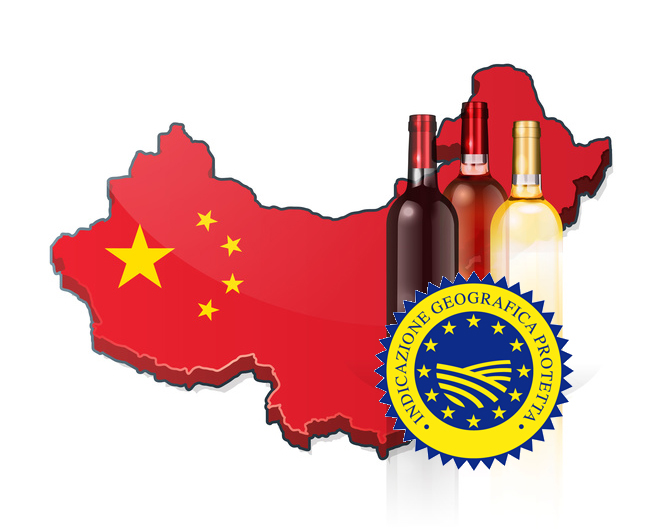
Le 26 DOP e IGP italiane tutelate
I prodotti italiani che godono della tutela prevista dall’accordo UE-Cina sono
Aceto balsamico di Modena IGP, Asiago DOP, Asti DOP, Barbaresco DOP, Bardolino superiore DOP, Barolo DOP, Brachetto d’Acqui DOP, Bresaola della Valtellina IGP, Brunello di Montalcino DOP, Chianti DOP, Conegliano-Valdobbiadene Prosecco DOP, Dolcetto d’Alba DOP, Franciacorta DOP, Gorgonzola DOP, Grana Padano DOP, Grappa IG, Montepulciano d’Abruzzo DOP, Mozzarella di Bufala Campana DOP, Parmigiano Reggiano DOP, Pecorino Romano DOP, Prosciutto di Parma DOP, Prosciutto di San Daniele DOP, Soave DOP, Taleggio DOP, Toscano IGP, Vino Nobile di Montepulciano DOP.
L’accordo, nel corso dei quattro anni successivi all’entrata in vigore, sarà esteso a 350 ulteriori specialità europee e cinesi.
Quanto vale l’export delle specialità DOP e IGP europee
Secondo un recente studio, l’export delle DOP e IGP dell’UE è cresciuto del 37% fra il 2010 e il 2017 in termini di valore; nello stesso periodo le esportazioni hanno superato il valore di 31,4 miliardi di euro.
Nel solo anno 2017 il mercato di prodotti DOP e IGP ha generato 75 miliardi di euro; le esportazioni intra-UE (fra singoli stati membri UE) hanno rappresentato il 42% del mercato, e le esportazioni extra-UE il 22%. Il vino è stato il primo prodotto di esportazione extra-UE sia in termini di valore (51%) che in termini di quantità (50%).
La strategia europea per la tutela di DOP e IGP nel mondo
 L’accordo TRIPs (Trade Related Aspects of Intellectual Property Rights) dell’Organizzazione Mondiale del Commercio ha previsto una protezione minima di DOP e IGP nel settore agroalimentare e vitivinicolo, pur se in diversa misura. Tuttavia, è mancata la successiva attuazione da parte degli Stati aderenti ai TRIPs.
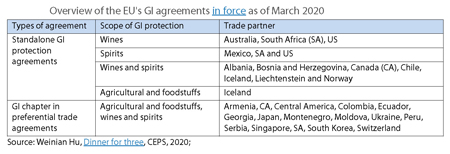
La strategia dell’UE ha dunque virato verso la negoziazione degli accordi bilaterali riguardanti DOP e IGP come elencati in questa tabella, ai quali si aggiunge ora l’accordo UE-Cina appena entrato in vigore.
Le potenzialità del mercato cinese per le DOP e IGP europee
 Secondo uno studio del Parlamento europeo la classe media cinese, anche per effetto di una serie di scandali connessi alla sicurezza di alcuni prodotti alimentari nazionali, aspira al consumo di prodotti importati di alta qualità che sono in molti casi tutelati da registrazione DOP o IGP.
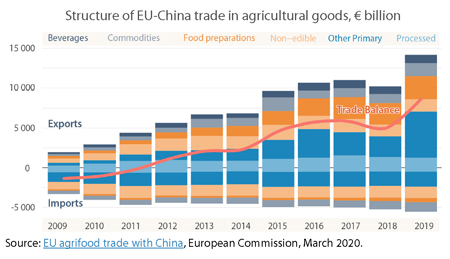
L’export verso la Cina di prodotti agroalimentari europei è in crescita da anni (vedi tabella), e la Cina è stato il terzo paese di esportazione nel 2020, per un valore di oltre 16 miliardi di euro.
Si prevede che l’entrata in vigore dell’accordo Cina-UE per la tutela di DOP e IGP darà ulteriore impulso alla crescita già in atto.
Per informazioni
Hai necessità di tutelare un prodotto agroalimentare sul mercato cinese? Contattaci per parlarne con un esperto.
Contenuti correlati
Scheda – Tutela prodotti agroalimentari
Flash news – Imitazione DOP? La registrazione tutela non solo la denominazione di origine ma anche l’aspetto del prodotto
Flash news – Indicazioni geografiche e denominazioni di origine, la nuova banca dati EUIPO
Flash news – Tutela indicazioni geografiche all’estero, passo UE verso un sistema unico globale
Flash news – Registrazione di indicazioni geografiche a Singapore estesa ai prodotti agroalimentari
[:en]The EU-China agreement on geographical indications came into force on the 1st of March 2021; it protects 100 European Union registered Geographical Indications and Denominations of Origin in China.
The 1st of March 2021 saw the entry into force of the Agreement between the European Union and the Government of the People’s Republic of China on cooperation on, and protection of, geographical indications (“EU-China agreement” in the following).
The EU-China agreement protects against imitation and usurpation 200 European and Chinese geographical indications (GIs) and denominations of origin (DOs), most of them for agri-food products. With 26 denominations, Italy is the European country with the highest number of protected products, including iconic wine denominations such as Barolo, Brunello and Chianti.
Over the next four years, the EU-China agreement is to be extended to a further 350 European and Chinese denominations.
The value of EU GIs and PDOs
According to a recent study, sales of PDO and GI products of the EU grew by 37% between 2010 and 2017; over the same period, exports were worth more than 31.4 billion euros. In the year 2017 alone global sales were worth about 75 billion euros; intra-EU exports of DOP and GI products (between single EU member states) represented 42% of the market, while extra-EU exports reached 22%.
Wine was the top DOP or GI protected product in extra-EU exports both in terms of value (51%) and quantity (50%).
European strategy for the protection of PDOs and GIs worldwide
The TRIPs (Trade Related Aspects of Intellectual Property Rights) agreement of the World Trade Organisation does provide for a minimal protection of GIs of PDOs in the wine and food sector, albeit in different measure. However such measures have not been implemented by TRIPs member states.
The EU’s strategy has therefore turned to the negotiation of bilateral agreements concerning PDOs and GIs as listed in this table, to which the EU-China agreement that has just entered into force must now be added.
The potential of the Chinese market for European GIs and PDOs
According to a study by the European parliament, the Chinese middle class is concerned about domestic food safety following a string of scandals, and is keen on imported, high-quality food and beverage products that are often protected by GIs and PDOs.
EU exports to China of agri-food products has been on the rise for years (see table), and in 2020 China was the third destination of exports, for a value of over 16 billion euros.
The entry into force of the EU-China agreement protecting GIs and DOs is expected to act as a further boost for an already growing market.
Related content
Information – Traditional origin agrifood products
Flash news – CJEU ruling in Morbier: PDO protection extends to visual appearance of product
Flash news – EUIPO launches new search data base for Geographical Indications
Flash news – Singapore opens new registry of Geographical Indications[:]